Baroque Improvisation for Piano: Partimenti, Counterpoint & Creative Mastery

The Art of Spontaneous Composition in the Baroque Style
Baroque improvisation for piano represents one of the most sophisticated and rewarding approaches to keyboard musicianship. This centuries-old practice, which formed the backbone of 18th-century musical education, combines rigorous structural understanding with spontaneous creative expression. From the methodical partimenti tradition to the expressive heights of stylus fantasticus, mastering Baroque improvisation opens doors to profound musical understanding and creative freedom.
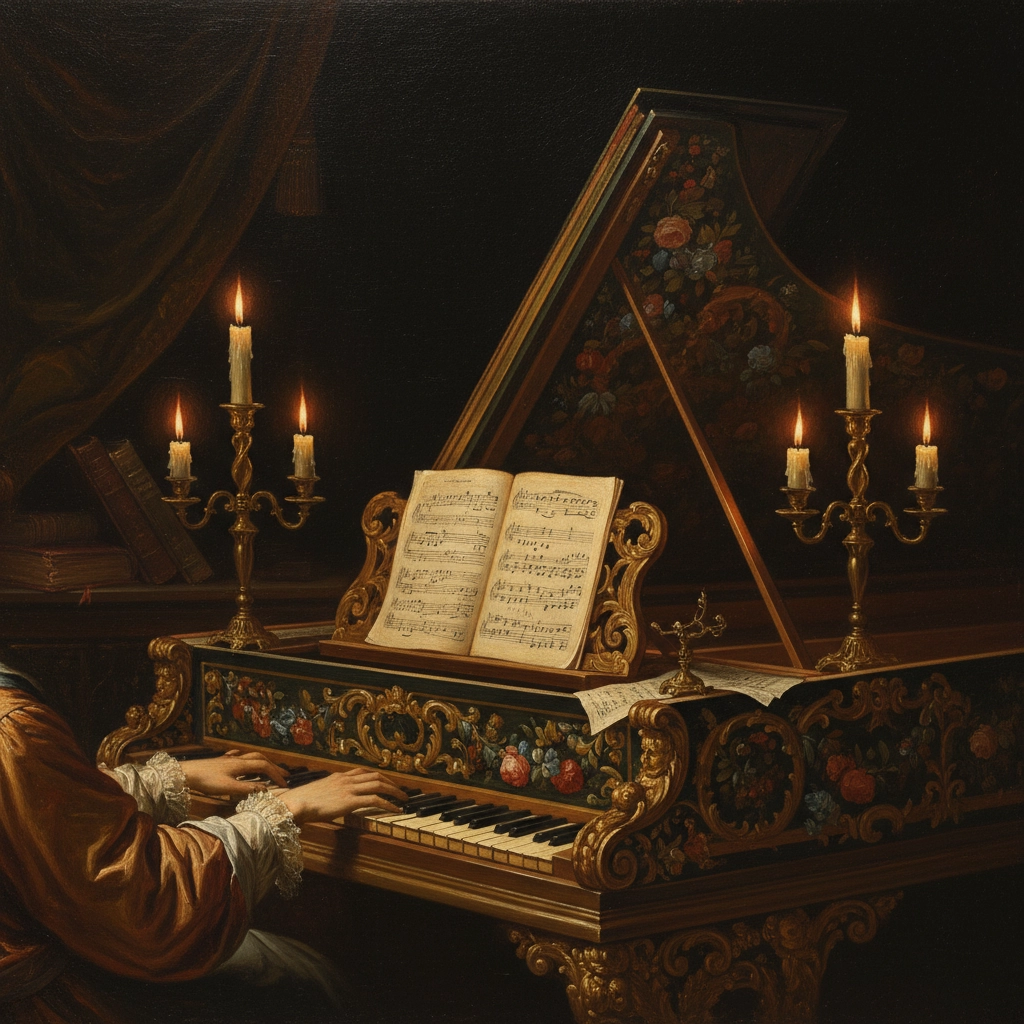
Understanding the Partimenti Foundation
The partimento method forms the cornerstone of authentic Baroque keyboard training. Unlike modern harmony instruction that emphasises chord symbols and vertical structures, partimenti focus on voice leading and contrapuntal thinking through practical keyboard work. These bass-line exercises, developed in 18th-century Naples, teach students to create complete musical compositions from simple figured bass patterns.
At The Maestro Online, our comprehensive partimenti courses guide students through this transformative learning process. Beginning with fundamental bass patterns and progressing to complex polyphonic realisations, these courses teach the essential skills that every Baroque keyboardist must master. Students learn to transform simple bass lines into fully voiced compositions with multiple independent melodic lines, developing the kind of fluent improvisation that characterised the greatest Baroque masters.
The pedagogical power of partimenti lies in their integration of theoretical knowledge with practical application. Rather than memorising chord progressions, students develop an intuitive understanding of how melodic lines interact harmonically and contrapuntally. This approach produces musicians who can create idiomatic Baroque textures spontaneously, with proper voice leading and stylistic authenticity.
Improvise Counterpoint: From Frère Jacques to Fugue
Counterpoint represents the heart of Baroque composition, and Stéphane Mottoul’s innovative three-course series provides a comprehensive pathway from beginner to advanced practitioner. Starting with “From Frère Jacques,” students discover how simple melodic patterns can generate sophisticated contrapuntal textures. The familiar tune becomes a vehicle for exploring fundamental principles of melodic independence and harmonic interaction.
The progression through Stéphane’s curriculum reveals the genius of systematic counterpoint study. The second course, focusing on three-part counterpoint, introduces students to the complex art of managing multiple independent voices simultaneously. This represents a crucial milestone in Baroque keyboard development, as three-part writing forms the foundation for understanding more complex textures found in Bach’s inventions and sinfonias.
The culminating course, “Improvising Fugue,” addresses the pinnacle of Baroque compositional technique. Fugal improvisation demands mastery of subject and answer relationships, episodic development, and sophisticated contrapuntal devices. Stéphane’s systematic approach breaks down these complex concepts into manageable steps, enabling students to develop genuine fluency in real-time fugal composition.
“The study of counterpoint through improvisation consistently produces more musical and idiomatic results than traditional written exercises,” notes leading Baroque pedagogy researcher Robert Gjerdingen.

Monophonic Improvisation with Leonard Schick
Leonard Schick’s Monophonic Improvisation masterclass addresses a crucial but often overlooked aspect of Baroque keyboard technique. Single-line improvisation, while appearing simple, requires sophisticated understanding of melodic construction, motivic development, and stylistic ornamentation. Schick’s approach demonstrates how monophonic playing serves as the foundation for more complex polyphonic improvisation.
The masterclass explores the relationship between melodic line and harmonic implication, showing how skilled improvisers can suggest rich harmonic progressions through single-note passages. This technique proves invaluable when developing the independent voice leading that characterises authentic Baroque style. Students learn to create melodic lines that function both as beautiful melodies in their own right and as structural voices within larger polyphonic contexts.
Schick’s emphasis on historical ornamentation practices enriches students’ understanding of Baroque melodic language. Rather than viewing ornaments as decorative additions, students discover their structural and expressive functions within the broader musical discourse. This knowledge proves essential when progressing to more complex improvisation challenges.
Improvise Stylus Fantasticus and Toccatas
Nigel Allcoat’s masterclasses on Stylus Fantasticus and Baroque Toccatas explore the most virtuosic and expressive aspects of Baroque keyboard improvisation. The stylus fantasticus, characterised by dramatic contrasts, unexpected harmonic progressions, and brilliant technical passages, represents the height of Baroque keyboard artistry. Allcoat’s approach demonstrates how to balance structural coherence with spontaneous expression.
The toccata form provides an ideal vehicle for developing advanced improvisation skills. These pieces typically feature alternating sections of free-flowing passagework and more structured fugal episodes. Students learn to navigate seamlessly between different textural approaches, developing the flexibility and technical command that define masterful Baroque improvisation.
Allcoat’s teaching emphasises the relationship between gesture and meaning in Baroque music. Students discover how specific technical patterns convey emotional content, enabling them to craft improvisations that communicate effectively with audiences. This understanding elevates improvisation from mere technical display to meaningful musical communication.

Advanced Improvisation with Sietze De Vries
Sietze De Vries brings exceptional expertise and pedagogical insight to Baroque improvisation instruction through his comprehensive masterclass series. His approach synthesises historical research with practical keyboard application, providing students with both scholarly depth and performative fluency. De Vries’s teaching demonstrates how thorough understanding of 18th-century compositional practices enhances contemporary improvisation.
The masterclasses address sophisticated topics including advanced partimenti realisation, complex contrapuntal textures, and stylistically authentic ornamentation. Students develop the kind of comprehensive musical understanding that enables truly professional-level improvisation. De Vries’s emphasis on historical performance practice ensures that students develop authentic Baroque style rather than modern approximations.
His pedagogical approach emphasises the integration of analytical understanding with intuitive musical response. Students learn to recognise and utilise common Baroque schemas: recurring melodic and harmonic patterns that composers used as building blocks for larger compositions. This knowledge provides a vocabulary for improvisation that enables both structural coherence and creative freedom.
Practical Applications and Performance
Successful Baroque improvisation requires systematic practice and gradual skill development. Begin with simple two-part exercises, focusing on smooth voice leading and proper contrapuntal motion. Progress to three-part textures, incorporating the advanced techniques learned through Stéphane Mottoul’s counterpoint series. Regular practice with partimenti exercises develops the finger patterns and harmonic reflexes essential for fluent improvisation.
Performance opportunities provide crucial development experiences. Whether improvising preludes before written works or creating complete improvisations for recital programmes, live performance tests and refines improvisational skills. The immediate feedback from audiences helps develop the communication skills that distinguish memorable musical performances.
Recording practice sessions enables detailed self-assessment and progress tracking. Students can identify areas needing attention and monitor their development over time. This reflective approach accelerates learning and ensures steady advancement toward mastery.
Artist Profile: Johann Sebastian Bach (1685-1750)
The undisputed master of Baroque improvisation, Bach’s legendary skills at the keyboard were renowned throughout Germany. Contemporary accounts describe his ability to improvise complete fugues on any given subject, often incorporating multiple themes simultaneously. His systematic approach to counterpoint and harmonic progression provides the foundation for all serious Baroque improvisation study. Bach’s advice to students emphasised regular practice with figured bass realisation and contrapuntal exercises. His pedagogical works, including the Well-Tempered Clavier and the Art of Fugue, continue to provide models for improvisational development. Modern students can follow Bach’s systematic approach through structured courses that develop both technical facility and creative imagination.