Have you ever wondered what separates a bedroom musician from someone who gets called up to play on a hit record? The answer isn’t just talent: it’s training like a session professional. And here’s the brilliant news: you can develop these exact skills while preparing for your music exams.
Whether you’re a private music school looking for fresh approaches to exam preparation, or a student dreaming of playing music that actually sounds like the songs you love, session-style training is your secret weapon. Let’s dive into how the pros do it: and how you can too.
What Exactly Is Session-Style Playing?
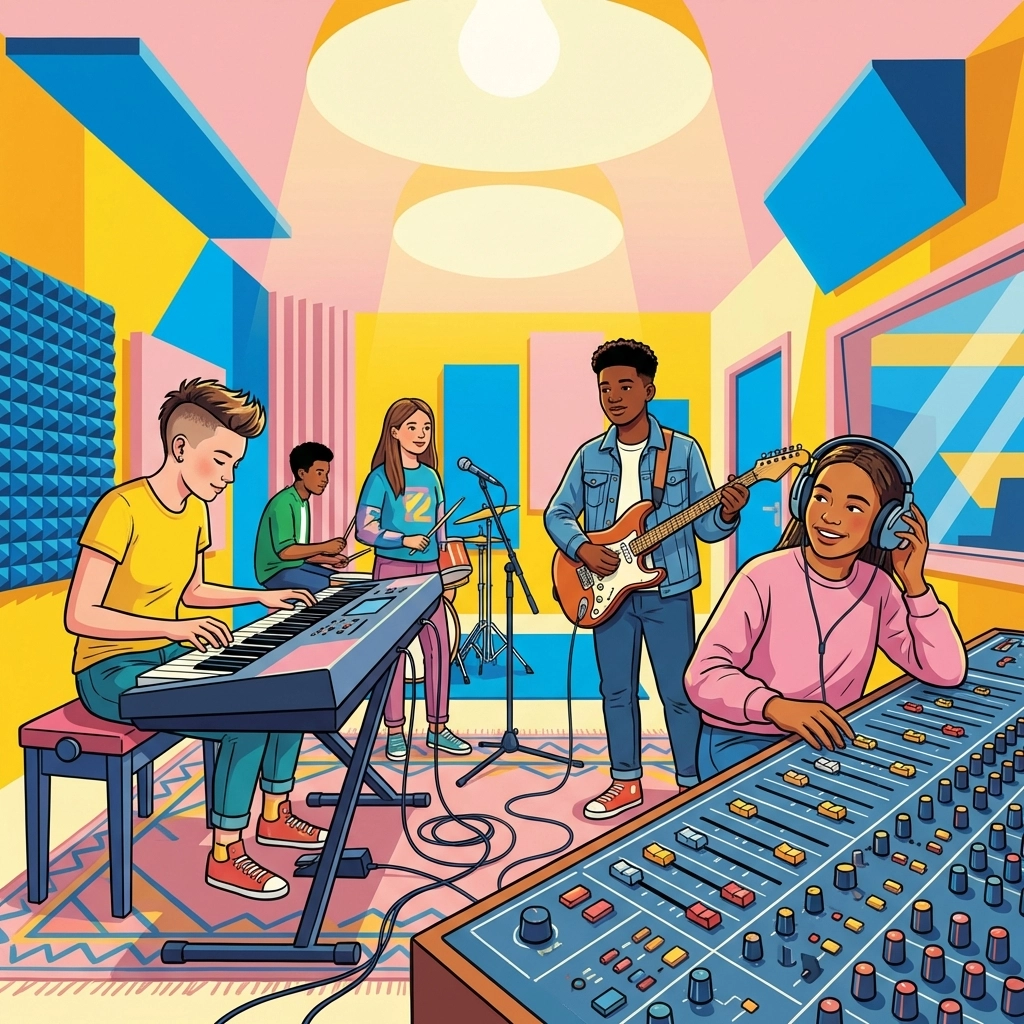
Picture this: a producer calls you at 9am. By 10am, you’re in a studio you’ve never seen before, with musicians you’ve never met, playing a song you’ve never heard. By lunchtime, you’ve nailed a perfect take that ends up on a chart-topping album.
That’s the life of a session musician. These are the unsung heroes behind countless hit records: the pianists, guitarists, drummers, and vocalists who can walk into any musical situation and deliver brilliance on demand.
Session-style playing isn’t about showing off technical tricks. It’s about:
- Adaptability – Reading a room (and a chart) instantly
- Musicality – Serving the song, not your ego
- Improvisation – Creating something fresh within a structured framework
- Professionalism – Delivering consistent, high-quality performances every single time
The good news? These skills aren’t reserved for elite professionals. They can be taught, practised, and examined: which is exactly what The Maestro Online Pop Piano Exams are designed to do.
Training Like a Working Professional
Traditional exam preparation often focuses heavily on perfecting a small repertoire of pieces. Whilst there’s absolutely nothing wrong with that approach: it builds discipline and precision: it doesn’t always reflect how music works in the real world.
Session musicians train differently. Here’s how you can adopt their methods:
Playing Complete Cover Versions
One of the most valuable skills any musician can develop is the ability to learn and perform a complete song: not just isolated excerpts or simplified arrangements.
When you learn a full cover version, you understand:
- How intros set up the mood
- How verses build anticipation
- How choruses deliver emotional payoff
- How bridges create contrast
- How outros bring satisfying closure
As legendary session keyboardist Greg Phillinganes (who has played with everyone from Michael Jackson to Stevie Wonder) once said: “You have to understand the whole picture before you can paint your corner of it.”
The Maestro Online Pop Piano Exams embrace this philosophy. We encourage students to perform complete arrangements that showcase their understanding of song structure: not just their ability to play technically demanding passages.
Understanding Charts and Lead Sheets
In a professional session, you won’t always get fully notated sheet music. Often, you’ll receive a chord chart or lead sheet and be expected to create your own part on the spot.
This requires:
- Chord knowledge – Instantly recognising and voicing any chord symbol
- Stylistic awareness – Knowing how a ballad part differs from a funk groove
- Listening skills – Hearing what other musicians are playing and fitting in
For private music schools, teaching chart reading opens up enormous possibilities. Students can learn current pop songs without waiting for official sheet music to be published. They can jam with friends. They can join bands.
Our interleaved practice method is particularly effective for developing these skills, as it trains the brain to switch between different musical contexts: exactly what session players do daily.

Developing Genuine Improvisation Skills
Here’s where session-style training really shines. Real improvisation isn’t about playing random notes and hoping for the best. It’s about making informed, musical choices in the moment.
Herbie Hancock captured this beautifully: “In improvisation, there are no mistakes: only opportunities.”
Genuine improvisation requires:
- Theoretical understanding – Knowing which scales and notes work over which chords
- Vocabulary – Having a collection of licks, patterns, and ideas to draw from
- Ear training – Hearing what you want to play before your fingers move
- Confidence – Trusting yourself to take musical risks
The Maestro Online Pop Piano Exams actively encourage improvisation. We want to hear YOUR musical voice, not just your ability to reproduce someone else’s arrangement note-for-note. This makes our exams genuinely exciting: both to take and to assess.
Artist Profile: Nile Rodgers
The Ultimate Session Musician Who Became a Legend
If you’ve ever danced to “Le Freak,” “Good Times,” “Let’s Dance,” or “Get Lucky,” you’ve experienced the magic of Nile Rodgers. As co-founder of Chic and one of the most in-demand producers and session guitarists in music history, Rodgers embodies everything session-style playing represents.
Career Highlights: Rodgers has worked with David Bowie, Madonna, Duran Duran, Diana Ross, and Daft Punk. His distinctive guitar work has sold over 500 million records worldwide.
His Approach: Rodgers is famous for his “deep hidden meaning” philosophy: every musical choice serves the song’s emotional core. He listens first, then plays.
Advice for Students: “Learn everything you can about music theory, then forget it when you play. Let your heart lead, but let your training catch you when you fall.”
Nile Rodgers proves that session-style skills don’t limit creativity: they unleash it.
How Our Exams Reflect Real-World Musical Skills
At The Maestro Online, we’ve designed our Pop Piano Exams to mirror what actually happens in professional music-making. This isn’t about being “easier” or “harder” than other exam boards: it’s about being relevant.
Our exams celebrate:
- Complete performances – Play full songs, not truncated versions
- Creative interpretation – Add your own flair to arrangements
- Genuine improvisation – Show us what YOU would play
- Modern repertoire – Songs students actually want to learn
- Flexible submission – No stressful deadlines; submit when you're ready
For private music schools, this approach transforms exam preparation from a chore into genuine musical development. Students aren’t just “getting through” their grades: they’re building skills that will serve them for life.

A Practical Training Schedule
Ready to train like a session pro? Here’s a weekly practice framework that balances all the essential skills:
| Day | Focus | Duration |
|---|---|---|
| Monday | Chord voicings and chart reading | 30-40 mins |
| Tuesday | Working on complete cover version | 45-60 mins |
| Wednesday | Improvisation over backing tracks | 30 mins |
| Thursday | Technical exercises and scales | 30 mins |
| Friday | Full performance run-through | 45 mins |
| Saturday | Ear training and listening | 30 mins |
| Sunday | Rest or casual playing | As desired |
Remember: quality trumps quantity every time. Focused, deliberate practice for 30 minutes beats mindless repetition for hours. Record yourself regularly, identify weak spots, and target them specifically.
Our masterclass subscription provides structured guidance through each of these areas, with expert tutors who’ve worked professionally in the music industry.
Building Confidence Through Authentic Preparation
Perhaps the greatest benefit of session-style training is the confidence it builds. When you know you can walk into any musical situation and contribute meaningfully, exam nerves become much more manageable.
You’re not just hoping to remember a memorised piece. You’re demonstrating genuine musical ability: the same ability that gets professional musicians hired again and again.
For students aged 10-14 especially, this approach is transformative. They’re not just “doing an exam”: they’re learning to be real musicians. That’s a distinction that changes everything.
Start Your Session-Style Journey Today
Whether you’re a private music school seeking fresh exam options, or an individual learner ready to train like the pros, The Maestro Online Pop Piano Exams offer a pathway that’s modern, musical, and genuinely exciting. Because music exams shouldn’t just test what you’ve memorised: they should celebrate who you are as a musician.
Frequently Asked Questions (FAQ)
What exactly is “session-style” practice?
Session-style practice mimics the way professional musicians prepare for recordings or live gigs. Instead of just memorising a piece note-for-note, it focuses on understanding song structure, reading chord charts (lead sheets), and being able to improvise or adapt a part to fit a specific musical style.
How do session-style skills help with music exams?
By focusing on skills like improvisation and chart reading, students develop a deeper understanding of music theory and ear training. This builds confidence, making it easier to handle unexpected moments in an exam and allowing for a more authentic, musical performance rather than one based purely on rote memorisation.
Can beginners learn session-style techniques?
Absolutely! In fact, starting with session-style techniques like chord-based playing and basic improvisation helps beginners develop a “musical ear” much faster. It makes learning more engaging because they can quickly start playing along with their favourite pop and rock songs.
What is the difference between a lead sheet and standard sheet music?
Standard sheet music provides every single note, rhythm, and dynamic marking. A lead sheet (or chord chart) provides the basic melody and the chord symbols. A session-style musician uses the lead sheet as a map to create their own professional-sounding arrangement in real-time.
How does The Maestro Online assessment differ from traditional exam boards?
While traditional boards often focus on specific, set arrangements and technical precision, The Maestro Online prioritises genuine musicianship, creativity, and real-world skills. We assess complete songs, encourage improvisation, and allow students to showcase their unique musical voice within the exam framework.